
I remember the exact moment I realized my ‘pro’ gaming headset was a total lie. I was deep in a match of a tactical shooter, straining to hear the crunch of footsteps in the brush. Instead of clear direction, I got a hollow, digitized echo that made the world feel like it was made of cardboard. I had spent nearly three hundred dollars on ‘virtual 7.1’ marketing, and yet, I couldn’t tell left from right. That night, I tore the headset off, hooked up a pair of old bookshelf speakers and a dusty subwoofer from my living room, and my jaw hit the floor. The woods came alive. The depth was real. The distance was tangible. I wasn’t just playing a game anymore; I was inside it. Today, I want to show you how to ditch the gimmicks and build a 2.1 system that actually delivers on the promise of ‘immersion.’ We are going to solve the problem of thin, lifeless audio and get you a soundstage that feels three-dimensional without the clutter of seven different speakers.
Stop Chasing Surround Channels and Start Chasing Raw Quality
Most gamers fall into the trap of thinking more speakers equals better awareness. I made that exact mistake early on, cluttering my desk with tiny, cheap satellites. The truth is, your brain is incredibly efficient at positioning sound with just two ears, provided the signal is clean. When you use a 2.1 setup—two high-performance speakers and a dedicated sub—you are prioritizing the frequency range where the ‘action’ lives. You’ll find that the trick to making cheap bookshelf speakers sound expensive is often just about proper placement and pairing them with a decent amplifier. A common blunder I see is people cramming their speakers into corners to save space, but why your speakers bass port should never be pushed against a wall becomes very obvious once you hear the muddy, booomy mess it creates. By giving your gear some breathing room, you allow the stereo image to bloom. Have you ever felt like your expensive headset was actually making it harder to pinpoint enemies?
Does 2.1 Actually Give You a Competitive Edge?
You might be skeptical that ‘just’ two speakers can compete with a surround headset. However, high-quality stereo separation allows for much finer detail in the mid-range—where reload sounds and footsteps live. According to research from the Audio Engineering Society (AES), the human ear’s ability to localize sound depends heavily on the ‘transient response’ of the driver, something large bookshelf speakers do infinitely better than tiny headset drivers. If your current setup feels off, you might even need to learn how to tell if your speakers are out of phase in 30 seconds, as even one flipped wire can destroy your ability to track movement. To get that pro-level feel, you’ll also want to learn how to find the sweet spot for your speakers in a rectangular room. When you sit in that perfect triangle, the soundstage doesn’t just sit in front of you; it wraps around you. It’s not just about volume; it’s about the physics of air moving in your room, creating a physical impact that no pair of earmuffs can replicate. Let’s look at the hardware you’ll actually need to make this happen without breaking the bank.
Ditch the Desk Surface to Save Your Soundstage
The single biggest mistake I see in home setups is the ‘desk-flat’ placement. Most people plop their speakers right onto the wooden surface. The problem? Your desk acts like a giant, vibrating tuning fork, muddying up the mid-range and making everything sound like it’s coming from inside a cardboard box. I remember my first pair of high-end monitors; I was devastated because they sounded thin and scratchy. It wasn’t until I propped them up on two thick yoga blocks that the soundstage suddenly ‘lifted’ off the desk and floated right in front of my face. You will find that why your bookshelf speakers sound better when you move them off the desk is mostly about decoupling—breaking the physical connection between the speaker cabinet and your furniture. To take it further, serious audiophiles know the reason your speaker stands need to be filled with sand is to ensure the stand itself doesn’t sing along with the music. 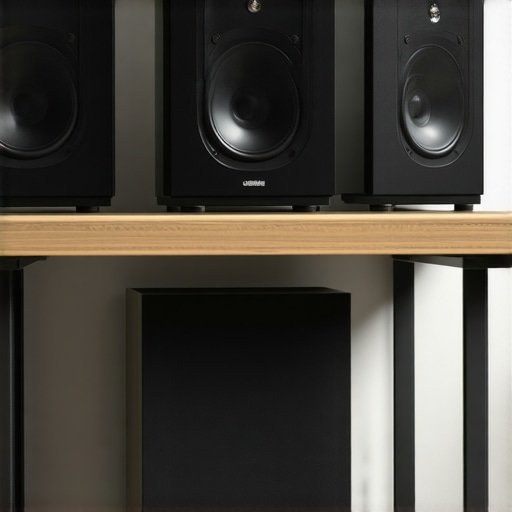
The Signal Chain is Your Foundation
Think of your audio signal like water. If the source is a muddy pond, no amount of expensive plumbing will make it taste fresh. Your PC’s internal sound card is surrounded by high-voltage components, fans, and processors that create ‘electrical noise.’ This is why you hear that faint hiss or static when everything is quiet. Learning how to use a dac to improve your desktop computers audio is the first step to clearing that digital fog. A Digital-to-Analog Converter (DAC) takes that messy signal out of the computer case and processes it in a clean environment. However, don’t get caught in the marketing hype; sometimes why your high-end dac sounds exactly like your laptops headphone jack comes down to the quality of your cables or the limitations of the speakers themselves. Start with a budget-friendly DAC/Amp combo to see the most immediate gains.
Make Your Subwoofer Disappear Into the Room
The ‘.1’ in your 2.1 setup is the secret sauce, but it is also the hardest part to get right. A common blunder is turning the subwoofer volume up until the windows rattle. In a perfect setup, you shouldn’t actually ‘hear’ the subwoofer as a separate unit; you should just feel like your bookshelf speakers suddenly became ten feet tall. If you can close your eyes and point to exactly where the sub is sitting, your settings are wrong. You need to master how to match your subwoofer phase with your main speakers. When they are out of phase, the sound waves actually cancel each other out, leaving a hollow ‘hole’ in your audio. I once spent three hours troubleshooting a ‘broken’ sub only to realize the phase switch was flipped, making the bass waves fight the speakers instead of helping them. Position is also vital; why your subwoofer sounds better in the corner of the room is a phenomenon called ‘boundary loading,’ which naturally boosts the low-end output without straining the amplifier. Just be careful not to create a boomy mess—use the ‘subwoofer crawl’ by placing the sub in your chair, playing a bass-heavy track, and crawling around the room to find where it sounds the tightest. That is where the sub belongs.
Stop Overspending on Your Digital Converter
Most people will tell you that a high-end DAC is the only way to save your audio quality. I used to be that guy, hunting for the most expensive chipsets on the market. But here is a hard truth that might upset some purists: why your high-end dac sounds exactly like your laptops headphone jack often comes down to the quality of the recording or the limitations of your transducers. If you are playing compressed streams through budget drivers, a thousand-dollar DAC is just a shiny paperweight. Before you drop half a month’s rent on a converter, ensure your signal chain is actually capable of revealing that detail. If you are hearing static, it might not even be the DAC; you might need to learn how to get rid of the annoying hiss in your budget car amp or desktop setup by checking your ground points.
The Myth of the Thousand-Hour Break-In
There is a massive debate in the audiophile community about ‘burning in’ gear. While it is true that the mechanical spider and surround of a speaker loosen up slightly after the first few hours of use, the truth about speaker break-in periods is that the change is often too subtle for the human ear to detect in a blind test. Most of what people call ‘break-in’ is actually ‘brain-in’—your auditory cortex adjusting to the new sound signature. If you want to be safe, knowing how to properly break in new headphones without using white noise is better than blasting high-frequency static that could actually stress the voice coil prematurely. 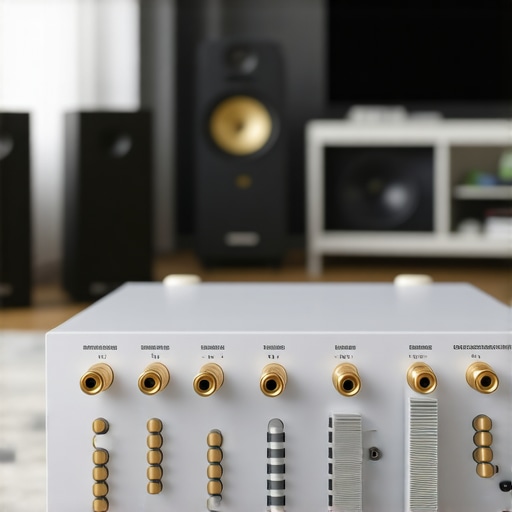
Why Do Your High-Res Files Sometimes Sound Harsh?
It feels counterintuitive, but sometimes upgrading to 24-bit/192kHz files makes your music sound worse. This is often because high-resolution audio can reveal flaws in the original master or cause intermodulation distortion in amplifiers that aren’t built to handle ultrasonic frequencies. You might find that why your speakers sound harsh when you play high-res files is a byproduct of your system struggling to reproduce sounds you can’t even hear. According to research by Dr. Floyd Toole, a pioneer in acoustic science, the room’s interaction with the speaker has a far greater impact on what you hear than the difference between a standard CD and a high-res file.
Don’t Ignore the Impedance Trap
If you’ve ever had your music cut out right during the best part of a song, you’ve likely hit the ‘protection mode’ wall. This usually happens because you didn’t master the secret to choosing the right ohm rating for your amp. Forcing a 4-ohm load on an amp designed for 8-ohms is a recipe for heat and failure. This is exactly why your receivers protection mode keeps triggering at high volume—it is literally trying to prevent itself from melting. Finally, never underestimate the power of your floor. If your speakers are too bright and clinical, you don’t need new cables; why you should use a rug to fix a bright sounding room is one of the cheapest and most effective ‘upgrades’ you can make. Have you ever spent a fortune on a piece of gear only to realize the problem was just a setting or a bare floor? Let me know in the comments.Nothing kills the joy of a high-end audio setup faster than a scratchy volume pot or a sudden, unexplained hum. If you want your investment to last, you have to treat it like a high-performance engine. I’ve seen beautiful vintage gear rendered useless because of simple neglect. For instance, if you’ve picked up a classic receiver and notice the sound crackles when you turn the dial, you don’t need a new amp; you just need to know how to fix a scratchy volume knob on an old amp using a bit of high-quality contact cleaner. I personally keep a can of DeoxIT D5 in my drawer at all times because oxidation is the silent killer of electrical clarity.
How can I make my sound system last a lifetime?
Maintenance is about proactive observation. For headphones, the biggest issue is often the hygiene and physical integrity of the materials. You should regularly learn how to clean your headphone ear pads without ruining the leather, as skin oils will eventually eat through the pleather and cause it to flake. If you notice your speakers don’t have the same impact they used to, it might not be your ears. You could be experiencing the physical degradation of the components, which is why your vintage speakers are losing their punch over time. According to technical documentation from Vishay Intertechnology, electrolytic capacitors—the heart of your amplifier’s power supply—have a finite service life that is significantly shortened by heat. This is why you should always ensure your amp has at least three inches of clearance for airflow. If you suspect the hardware itself is failing, knowing how to tell if your speakers capacitor is starting to fail can save you from a catastrophic short circuit that could fry your voice coils. 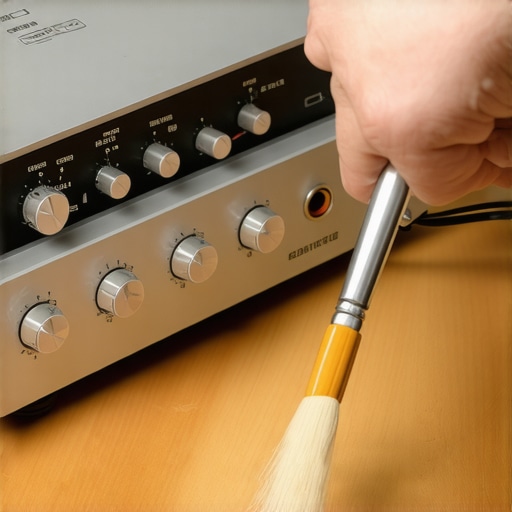
Scale Your System Without Starting Over
When you’re ready for more power, don’t just throw everything away. The beauty of a 2.1 system is modularity. You can swap out your bookshelf speakers for towers or upgrade your sub without touching the signal chain. However, as you add more gear, you might encounter physical wear on the speaker surrounds. If the foam starts to crumble, don’t panic; you can actually learn how to revive old speakers with new foam surrounds for a fraction of the cost of new drivers. I predict that in the next five years, we will see ‘self-healing’ DSP (Digital Signal Processing) become standard, where your amp automatically adjusts its output to compensate for aging capacitors or environmental changes. For now, we still rely on our ears and a few simple tests. If something sounds ‘fuzzy,’ it’s worth taking ten minutes to learn how to test your headphones for a blown driver at home before you process a warranty claim. My best advice? This weekend, perform a ‘seal check’ on your subwoofer. Use the simple paper test for finding air leaks in your speaker cabinet to ensure every bit of energy is being pushed into the room, not leaking out of the seams. You’ll be amazed at how much ‘lost’ bass you can recover with just a little bit of wood glue.
Lessons from a Decade of Chasing the Perfect Soundstage
Building a 2.1 system taught me that the most expensive piece of gear is actually the air in your room. You can spend thousands on headphones, amplifiers, and speakers, but if you don’t respect the physics of acoustics, you are just throwing money at a wall. I have realized that comfort is just as important as clarity; for instance, if you are switching back and forth between speakers and cans, you need to know why your headphones feel heavy on your head and how to adjust them for those long late-night sessions. Also, never trust a review more than your own ears. If a budget soundbar makes you tap your feet more than a clinical ‘audiophile’ monitor, the soundbar wins every time. Lastly, always be mindful of your environment—if you are a night owl, remember why your open-back headphones leak sound to everyone nearby before you crank the volume at 2 AM.
The Audio Junkie’s Essential Resources
If you are serious about taking the next step, I highly recommend a few specific tools. First, get a measurement app or microphone; you can actually learn how to use your phone to measure your rooms frequency response to find where those nasty bass peaks are hiding in your corners. Second, follow creators who focus on how gear actually feels in a real room rather than just the spec sheet. Third, keep a constant eye on home audio deals from refurbished electronics sites or regional forums to find high-end gear at half the retail price. These resources helped me stop guessing and start listening with intent.
Stop Researching and Start Listening
At the end of the day, all the technical talk about crossovers and impedance is just a means to an end. The goal is that moment where the hardware disappears and you are left with pure emotion. Whether you are hunting for the best headphones or building a massive 2.1 theater, remember that the best system is the one that makes you want to listen to just one more song. Don’t be afraid to experiment with your speakers and move things around until that soundstage finally clicks into place. What is the very first song or game you plan to experience once your 2.1 system is fully dialed in? Let me know in the comments below!